
AWS Cloud Migration & Modernisation Services
Move to AWS, then modernise what you moved: .NET to Linux, SQL Server to PostgreSQL, VMs to containers. Lower licence bills, faster applications, no big-bang risk.
AWS Cloud Migration & Modernisation Services

Everything AWS offers for migration and modernisation, delivered by one UK team
AWS has spent nearly two decades building the programmes, tools and agentic AI services that move workloads off ageing infrastructure and out of expensive licences. Versatile Commerce delivers all of it as a service: assessment and business case, lift-and-shift migration with AWS Application Migration Service, replatforming onto managed services, .NET Framework to modern .NET on Linux, SQL Server and Oracle to open-source databases on Amazon RDS and Aurora, containers and serverless, and mainframe or legacy code modernisation with AWS Transform.
We are an ISO 27001:2022 certified, UK-based engineering company. We plan in waves, keep a rollback path for every cutover, and measure the result in the two numbers that matter to a finance director: what you pay each month and how fast the application responds.
Our AWS Migration & Modernisation Services
Every engagement starts with discovery: an inventory of applications, servers, databases and the dependencies between them, using AWS Migration Hub and Application Discovery Service where it helps. We classify each workload against the seven migration paths (rehost, replatform, refactor, repurchase, relocate, retain, retire) and build a total cost of ownership comparison that includes the Windows, SQL Server and Oracle licences you would stop paying for. We also run an AWS Optimization and Licensing Assessment where you qualify, and help you check eligibility for AWS funding programmes such as the Migration Acceleration Program. The output is a wave plan, a budget and a timeline your board can approve.
For workloads that need to move quickly and change little, we use AWS Application Migration Service (MGN) to replicate servers continuously and cut over in minutes, whether they come from VMware, Hyper-V, physical hardware or another cloud. Windows Server, SQL Server and SAP estates move with their licences assessed for bring-your-own or AWS-provided options. Where a managed service removes operational work, we replatform during the move: self-managed databases onto Amazon RDS, file servers onto Amazon FSx or EFS, load balancers and backups onto native AWS services. Each wave is rehearsed, cut over out of hours with a tested rollback, and handed over with monitoring in place.
Most UK businesses still run line-of-business applications on .NET Framework 4.x, which ties them to Windows Server and IIS and the licences that come with both. We port those applications to modern .NET (8 or 9) running on Linux, using Porting Assistant for .NET and AWS Transform for .NET to find incompatible APIs and transform code at scale, then finishing the work by hand where tooling stops. The result runs on Amazon ECS, EKS or Lambda on Graviton processors with no operating system licence, typically with lower memory use and faster response times than the original. Where a full port is not yet justified, we containerise the existing application with App2Container as a first step.
Commercial database licences are often the largest single line in a hosting bill. We migrate SQL Server and Oracle databases to Amazon Aurora PostgreSQL, Aurora MySQL, or RDS for PostgreSQL and MySQL, using the AWS Schema Conversion Tool to convert schemas, stored procedures and functions, and AWS Database Migration Service to replicate data continuously so the cutover takes minutes rather than a weekend. Where an application has heavy T-SQL dependencies, Babelfish for Aurora PostgreSQL lets it keep talking SQL Server while the code is modernised behind it. Every migration includes a performance baseline, query tuning on the target and a validated rollback. For reporting workloads we also move data warehouses to Amazon Redshift.
Once a workload is on AWS, we modernise how it runs. Monoliths are decomposed where it pays and containerised onto Amazon ECS, EKS or Fargate; event-driven and bursty functions move to AWS Lambda behind API Gateway; compute moves to Graviton for better price-performance. We define everything as code with CloudFormation, CDK or Terraform, add CI/CD pipelines, right-size instances, apply Savings Plans and set up observability with CloudWatch and OpenTelemetry. Network and security are rebuilt to AWS standards: VPC segmentation, WAF, least-privilege IAM and multi-AZ or cross-region disaster recovery, with a monthly FinOps review so the bill keeps falling after go-live.
For COBOL, PL/I, Java EE and other legacy estates, we use AWS Transform, AWS's agentic AI service for modernisation, to analyse code, document business rules and generate modern Java or .NET services, with our engineers reviewing every change. Mainframe workloads are replatformed or refactored with AWS Mainframe Modernization, with VSAM, DB2 and IMS data migrated to managed databases and the new system validated side by side with the old before anything is switched off. Java EE applications move to Spring Boot on containers. Cutover is phased, with rollback gates, so a decades-old system is retired without a decades-old outage.
Assessment, Business Case & Migration Planning
Assessment, Business Case & Migration Planning
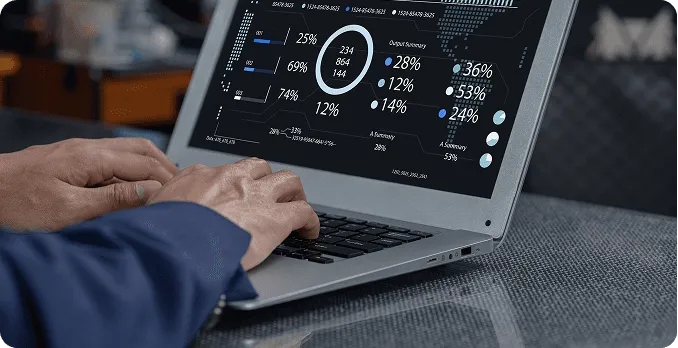
Every engagement starts with discovery: an inventory of applications, servers, databases and the dependencies between them, using AWS Migration Hub and Application Discovery Service where it helps. We classify each workload against the seven migration paths (rehost, replatform, refactor, repurchase, relocate, retain, retire) and build a total cost of ownership comparison that includes the Windows, SQL Server and Oracle licences you would stop paying for. We also run an AWS Optimization and Licensing Assessment where you qualify, and help you check eligibility for AWS funding programmes such as the Migration Acceleration Program. The output is a wave plan, a budget and a timeline your board can approve.
Rehost & Replatform Migration to AWS
For workloads that need to move quickly and change little, we use AWS Application Migration Service (MGN) to replicate servers continuously and cut over in minutes, whether they come from VMware, Hyper-V, physical hardware or another cloud. Windows Server, SQL Server and SAP estates move with their licences assessed for bring-your-own or AWS-provided options. Where a managed service removes operational work, we replatform during the move: self-managed databases onto Amazon RDS, file servers onto Amazon FSx or EFS, load balancers and backups onto native AWS services. Each wave is rehearsed, cut over out of hours with a tested rollback, and handed over with monitoring in place.

.NET Application Modernisation: Framework to .NET on Linux
Most UK businesses still run line-of-business applications on .NET Framework 4.x, which ties them to Windows Server and IIS and the licences that come with both. We port those applications to modern .NET (8 or 9) running on Linux, using Porting Assistant for .NET and AWS Transform for .NET to find incompatible APIs and transform code at scale, then finishing the work by hand where tooling stops. The result runs on Amazon ECS, EKS or Lambda on Graviton processors with no operating system licence, typically with lower memory use and faster response times than the original. Where a full port is not yet justified, we containerise the existing application with App2Container as a first step.
Database Modernisation: SQL Server & Oracle to PostgreSQL or MySQL
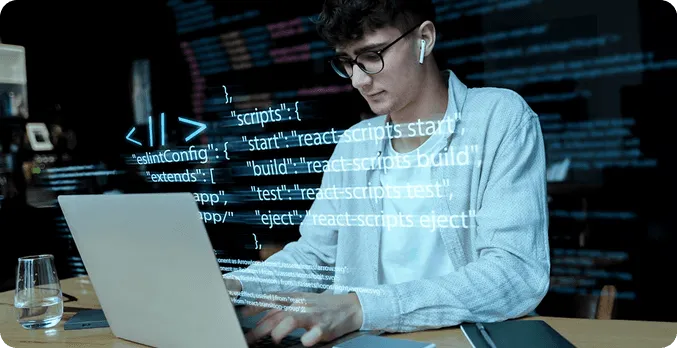
Commercial database licences are often the largest single line in a hosting bill. We migrate SQL Server and Oracle databases to Amazon Aurora PostgreSQL, Aurora MySQL, or RDS for PostgreSQL and MySQL, using the AWS Schema Conversion Tool to convert schemas, stored procedures and functions, and AWS Database Migration Service to replicate data continuously so the cutover takes minutes rather than a weekend. Where an application has heavy T-SQL dependencies, Babelfish for Aurora PostgreSQL lets it keep talking SQL Server while the code is modernised behind it. Every migration includes a performance baseline, query tuning on the target and a validated rollback. For reporting workloads we also move data warehouses to Amazon Redshift.

Containers, Serverless & Infrastructure Modernisation
Once a workload is on AWS, we modernise how it runs. Monoliths are decomposed where it pays and containerised onto Amazon ECS, EKS or Fargate; event-driven and bursty functions move to AWS Lambda behind API Gateway; compute moves to Graviton for better price-performance. We define everything as code with CloudFormation, CDK or Terraform, add CI/CD pipelines, right-size instances, apply Savings Plans and set up observability with CloudWatch and OpenTelemetry. Network and security are rebuilt to AWS standards: VPC segmentation, WAF, least-privilege IAM and multi-AZ or cross-region disaster recovery, with a monthly FinOps review so the bill keeps falling after go-live.

Mainframe, Java & Legacy Modernisation with AWS Transform
For COBOL, PL/I, Java EE and other legacy estates, we use AWS Transform, AWS's agentic AI service for modernisation, to analyse code, document business rules and generate modern Java or .NET services, with our engineers reviewing every change. Mainframe workloads are replatformed or refactored with AWS Mainframe Modernization, with VSAM, DB2 and IMS data migrated to managed databases and the new system validated side by side with the old before anything is switched off. Java EE applications move to Spring Boot on containers. Cutover is phased, with rollback gates, so a decades-old system is retired without a decades-old outage.

How a Migration & Modernisation Programme Runs
Discover

We inventory your applications, servers, databases and licences, map dependencies and measure current performance and cost. Nothing is assumed; the baseline is written down so the result can be proved against it.
Plan

Each workload gets a migration path, a target architecture on AWS and a place in a wave. We produce the business case, including licence savings and any AWS funding you qualify for, and agree the rollback rules before anything moves.
Migrate

Waves move on a rehearsed schedule using AWS MGN for servers and DMS for data. Cutovers happen out of hours with monitoring live from the first minute. If a wave fails its checks, it rolls back and we fix the cause before trying again.
Modernise

.NET ports to Linux, database conversions to PostgreSQL or MySQL, containerisation and serverless refactoring follow once the workload is stable on AWS, each with its own performance and cost test against the baseline.
Optimise

After go-live we right-size, apply Savings Plans, tune queries and review the bill every month. Our managed support team can run the estate for you, or hand it to yours with documentation and training.
Why Choose Versatile Commerce?
Learn More About Us100+
Successful Projects
50+
Certified Experts
10+
Countries Served Globally
Migration & Modernisation Across Industries
Legacy applications and licensed databases are everywhere. The migration path differs by sector; the discipline does not.

Healthcare
Patient systems moved with UK data residency and audit trails intact.

eCommerce
Peak-ready stores on autoscaling containers instead of fixed servers.

Finance
Core platforms off SQL Server licences with validated, reversible cutovers.

Manufacturing
ERP and MES integrations rehosted, then modernised in waves.

Retail
.NET point-of-sale and back-office apps ported to Linux containers.

Education
Membership and learning platforms consolidated onto managed AWS services.

Real Estate
Property and lettings systems moved off end-of-life Windows servers.

Logistics
Tracking and fleet systems rebuilt as event-driven serverless services.
AWS Services & Tools We Work With
The AWS migration and modernisation toolset, applied by engineers who have used it on real estates.
 AWS Application Migration Service
 AWS Migration Hub
 Database Migration Service & Schema Conversion Tool
 AWS Transform (agentic AI)
 AWS App2Container
 Amazon EC2
 Amazon ECS, EKS & Fargate
 AWS Lambda & API Gateway
 AWS Graviton processors
- Amazon RDS
- Amazon Aurora (PostgreSQL & MySQL)
 PostgreSQL & MySQL
 .NET 10 on Linux
 Windows & SQL Server on AWS
 Amazon S3 & FSx
 CloudFormation, CDK & Terraform
Explore More
 CLOUD COMPUTINGSignificance of Cloud Engineering in Modern ComputingWhat cloud engineering is, why it matters and how it underpins modern applications...Read more
 DIGITAL TRANSFORMATIONNavigating the Digital Migration: A New Frontier in Business TransformationHow to plan a migration that changes the business rather than just the hosting...Read more
 BESPOKE SOFTWARE DEVELOPMENTBespoke Software Development vs. Off-the-Shelf SolutionsWhen to build, when to buy, and what it means for the systems you already run...Read more
 ARTIFICIAL INTELLIGENCEThe Real ROI on AI Agents for UK EnterprisesWhere AI agents pay back for UK enterprises, including in engineering and modernisation work...Read more
01 — 01
Frequently Asked Questions
What does moving from .NET Framework to modern .NET on Linux actually save?
Two things. The Windows Server licence on every instance disappears, because modern .NET runs on Linux, and the application usually runs faster and in less memory, so it needs fewer or smaller instances. On AWS those instances can also be Graviton-based, which costs less again. The exact figure depends on how many Windows instances you run today and how the application is written; the assessment puts a number on it before you commit.
Can we move a SQL Server database to PostgreSQL without rewriting the application?
Often, yes. The AWS Schema Conversion Tool converts most schema objects and a large share of stored procedures automatically, and we convert the rest by hand. For applications with heavy T-SQL dependencies, Babelfish for Aurora PostgreSQL accepts SQL Server's wire protocol and dialect, so the application can keep working while the code is modernised gradually. Data moves with AWS Database Migration Service using continuous replication, so the final cutover is minutes, not a weekend.
Which migration path is right for us: rehost, replatform or refactor?
Usually a mix, decided per workload. Rehost (lift and shift with AWS MGN) is right when the priority is leaving a data centre quickly or an end-of-life platform. Replatform is right when a managed service, such as Amazon RDS, removes real operational work at low effort. Refactor into containers or serverless is right when the application is strategic and its cost or scaling problems come from its architecture. The assessment maps every workload to one of the seven paths, including retire and retain.
Do you use AWS Transform and other AI tooling, and is the output safe?
Yes. We use AWS Transform for .NET, mainframe and Java modernisation, Porting Assistant for .NET and App2Container where they fit. They do the bulk analysis and transformation far faster than people can. Every change they produce is reviewed, tested against the original behaviour and run side by side with the existing system before cutover. The AI accelerates the work; our engineers remain accountable for it.
How long does a migration or modernisation programme take?
An assessment and business case typically takes two to four weeks. A single application replatform or .NET port is usually eight to twelve weeks. A database migration to PostgreSQL runs in parallel with that. Data centre exits and mainframe programmes run in waves over several months. We give you a dated wave plan after the assessment and report against it every week.
Can you help with AWS funding or credits for the migration?
We help you check what you qualify for and prepare the application. AWS runs programmes such as the Migration Acceleration Program and the Optimization and Licensing Assessment that can offset assessment and migration costs for eligible workloads. Eligibility and amounts are set by AWS and depend on the size and type of the estate, so we confirm them with AWS during the assessment rather than promising figures up front.
Will our data stay in the UK?
Yes, if that is what you need. We build in the AWS Europe (London) Region by default for UK customers, with backups and disaster recovery kept in UK or EU regions as your policy requires. Versatile Commerce is ISO 27001:2022 certified, and access to your environment is role-based, logged and reviewed.
What happens after the migration?
You choose. Our Maintenance & Support team can run the AWS estate for you, with monitoring, patching, cost reviews and on-call cover. Or we hand it to your team with infrastructure as code, runbooks and training. Either way the first three months include a monthly FinOps review so the savings in the business case actually show up on the bill.
Ready to Cut Licence Costs and Modernise on AWS?
Versatile Assistant
Usually replies within one working day
Sent. Thank you!
One of our team will reply by email, usually within one working day. If it's urgent, call +44 333 006 2294.
Book a discovery call